

To play Halloween bingo with preschoolers, show one picture at a time, ask children to find the matching picture on their cards, and mark each match. Choose the winning pattern before you start. An adult can name and show every calling card, so children do not need to read the words underneath the pictures.
The easiest first round begins with a demonstration. Show a pumpkin, find a pumpkin together, and practise marking just that square. Then let children try the next picture. You can use a printable picture-bingo set you already own; the important part is making the pictures, pace and rules clear.
This guide explains a simple round, optional changes for mixed ages, and what to do when someone misses a call or is not ready for a competitive game. For a wider choice of things to do before or after bingo, see our not-too-spooky Halloween activities for preschoolers.
What you need before you start
- One picture-bingo card per player or pair. Use different card layouts for a usual competitive round. If two children have identical cards, explain that they may finish together.
- The matching calling cards. Check that they belong to the same set as the playing cards. Keep called pictures separate from the ones still waiting.
- A way to mark a match. A supervised child can make a crayon mark on a disposable copy. Follow the supplies’ age guidance and choose a method that suits the child.
- An adult caller and a clear playing space. Everyone should be able to see the picture being shown. Keep drinks and snacks away from the cards.
Print one test card before printing the whole group set. Check that every picture is clear, the outside edge is complete, and the print is large enough for your child to scan comfortably. Follow the file’s paper-size instructions. If you use A4 paper for a US Letter file, check the print preview and the test sheet rather than assuming it will fit unchanged.
Prepare small pieces with care. Have an adult cut out the calling cards and any tokens. Small game pieces can be choking hazards, particularly around children under three; see the CPSC guidance on small parts. Keep loose pieces away from younger siblings and children who mouth objects. Avoid coins, beads or small sweets as markers. If loose pieces are unsuitable, use a supervised mark-on-paper version or let the adult record each match.
Choose a winning pattern everyone understands
Different bingo sets use different grids and rules. Show the pattern on a spare card before playing, instead of relying on the word “bingo” to explain it. For a five-by-five card, one complete line has five spaces. Tell everyone whether lines across, down and diagonally all count.
If a card has a free space, explain how you will use it. In a standard free-space round, mark that space at the start; it counts toward a line without a picture being called. A card without a free space does not need one added.
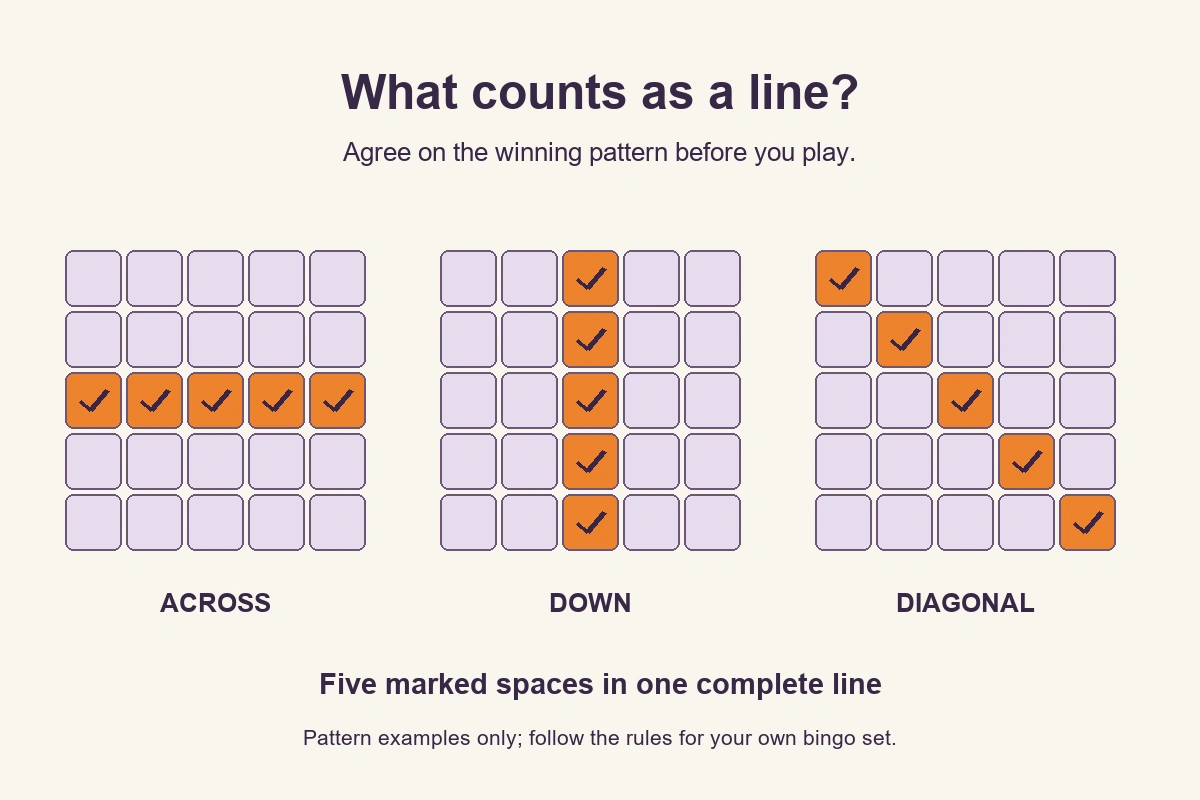
| Starting point | Agree before the round | Useful reminder |
|---|---|---|
| Learning to match | Find a few called pictures together; no winner needed. | This is practice, so you can stop whenever you choose. |
| First line game | Complete one horizontal row. | Show a row with your finger before calling. |
| Ready for more patterns | Complete a row, column or diagonal. | Demonstrate all the allowed directions. |
| Cooperative play | Work together toward an agreed line on a shared card. | Children can help one another find matches. |
These are optional home or classroom adaptations. If you are using a purchased set, read its included instructions first and tell the group which rule you are changing. Keep that rule for the whole round.
How to play Halloween bingo with preschoolers
1. Explore the pictures together
Hand out the cards and give children a moment to look. Name any unfamiliar pictures before the first call. A child might call a jack-o’-lantern a pumpkin, or a cauldron a pot; agree a simple name and keep using it.
Check the pictures with your child beforehand, too. If a character feels uncomfortable, choose a different set or a different game. Simply removing its calling card can make some winning lines impossible to complete.
2. Demonstrate one turn
Hold up a calling card and say, “Here is the pumpkin. Look for this picture on your card.” Show the match on a spare card, then mark it. Explain that a player without that picture waits for the next call; they have not done anything wrong.
For a practice turn, leave the calling picture visible while everyone looks. Clear any practice marks before starting the real round, or use a separate demonstration sheet.
3. Call, show and pause
Mix the calling cards and draw one at a time. Name the picture, show it, and pause while the children check. A useful caller script is: “This is the owl. Find the same owl. Mark it if you have it. Ready for the next picture?”
Put each called card face up in a separate place. This gives you a record to check later. Watch the children rather than a timer; if someone is still searching, hold the picture up again before drawing another.
4. Check a completed pattern together
When a child says “Bingo,” pause the game. Ask them to point along the completed line, then check its pictures against the called cards. Count the free space if that was part of the agreed rule.
If a square was marked by mistake, help correct it and carry on. If two players finish on the same call, celebrate both. There is no need to turn the checking step into a test or a race to shout loudest.
5. Finish clearly or reset for another round
You can finish after the first completed pattern or keep playing until other children complete theirs, provided you agree this at the beginning. A group cheer can be the whole celebration; prizes are optional.
For another round, clear the cards, return all the calling cards to the pile, and mix them again. If you used crayons, start with fresh playing sheets. Offer a pause or a different activity when the group has had enough.
Make the game work for non-readers and mixed ages
Show the picture every time. The printed label can help the adult caller, but a child can match the image without decoding the word. Keep the card upright, use the same name each time, and avoid adding sound effects or riddles until everyone understands the basic game.
Pair children thoughtfully. An older child can help scan a card while a younger child points to the match. Ask the helper to wait before giving the answer. On a shared card, alternate who marks each picture so one person does not take over.
Offer a quiet way to signal a finish. A raised hand or “I have a line” works just as well as a loud shout. Seat children where they can see the caller, and repeat or bring the picture closer when needed.
Try matching before competition. If the grid feels like too much, use one card together and find a few pictures. You can describe it as practice rather than changing the winning rule halfway through a group game. There is no requirement to complete the whole card or move on to a harder pattern that day.
Fix the small things that interrupt a round
- “I missed that picture.” Show the most recent calling card again. If necessary, review the face-up called pile together before continuing.
- “These pictures look the same.” Point out one visible difference, such as the shape of a hat or the handle on a treat bucket. Use the picture itself, not just its color, to identify it.
- “My card does not have it.” Explain that not every call must produce a match on every card. Check that all the playing and calling cards came from the same set.
- “The markers keep moving.” Make more room around the card, or use a disposable copy with crayon marks next time. Do not add extra small objects to weigh pieces down.
- “I wanted to win.” Acknowledge the disappointment, offer a break, and consider a shared-card round next time. Keep the current round’s agreed rules clear.
For the next activity, offer one calm choice rather than a whole new schedule. Our screen-free activity ideas include other ways to play, and the Free Printables page lets you explore available samples. Those samples are separate from the paid bingo pack below.
Using the KidsColorsBook Halloween Bingo pack
If you would like a ready-made set, Halloween Bingo for Kids – 10 Printable Cards includes 10 different playing cards, calling cards, printable tokens and How to Play instructions. It is listed for ages 3–8 and supplied as a digital download with US Letter PDF printables. You will need to print and prepare the pieces.
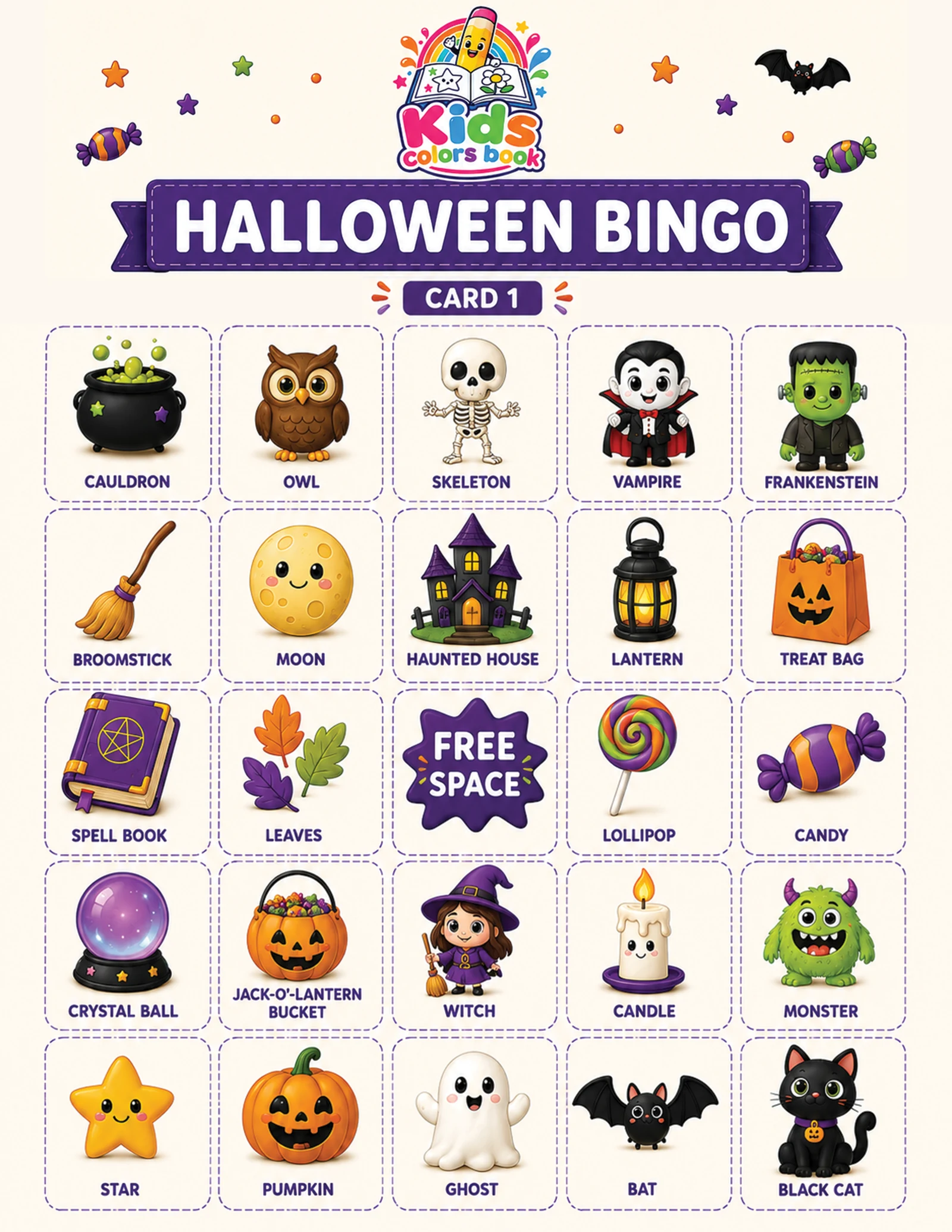
The Card 1 preview above shows a five-by-five grid with a central free space. The included instructions use five in a row across, down or diagonally. For a first game, demonstrate that pattern on the actual card; use the optional simpler versions in this guide only after explaining the change.
Choose the number of different cards you need. For more than ten players, consider pairs or small teams; printing duplicate layouts may produce simultaneous winners. Preview the artwork with your child before buying, and check the product page for the current contents and license. The listed license permits one-classroom use for the purchasing teacher or educator, as well as personal use.
You do not need another printable bundle just to try the game. If you already have a picture-bingo set, start there. Our guide to choosing printable activity books can help you check page complexity, print requirements and fit before choosing a new pack.
Frequently asked questions
Can children play Halloween bingo before they can read?
Yes, when the game uses matching pictures and the adult shows each calling card. Name the picture, hold it where everyone can see it, and give children time to find it. The word label does not have to be a reading task.
How many pictures make a bingo?
Follow the rules for your set. On the KidsColorsBook five-by-five cards, the included instructions use five spaces in a line across, down or diagonally. Explain any free space and demonstrate the winning pattern before starting.
Can we play without loose bingo tokens?
Yes. Use a supervised crayon mark on a disposable card, or let the adult record matches. Use a fresh copy for another round. Choose supplies appropriate for the child and keep small pieces away from younger siblings and children who mouth objects.
How long should a preschool bingo game last?
There is no fixed time for every group. Start with a demonstration and one round, pause between calls, and stop when the children are ready to move on. A larger winning pattern or a cover-all game can involve more calls.
Is this a free Halloween bingo download?
This is a free guide to setting up and playing the game. The linked KidsColorsBook bingo pack is a paid digital product, and no physical game is shipped. You can also follow the guide with a suitable picture-bingo set you already own.

2 notes from other parents