
Halloween play can be festive without being frightening or complicated. Start with the kind of activity your family needs right now, whether that means zero setup, a quiet table idea or room to move indoors.
The chooser gives you the practical details first. Once you find a good match, jump to its numbered heading for simple instructions and an optional way to adjust the challenge.
Halloween activities for preschoolers: quick picks
| Activity | Setup | Mess | Energy | Adult help | Setting |
|---|---|---|---|---|---|
| 1. Halloween charades | None | None | Moderate | Play together | Indoors |
| 2. Spooky-but-silly I Spy | None | None | Quiet | Play together | Indoors |
| 3. Monster movement game | None | None | Active | Stay nearby | Clear indoor space |
| 4. Pumpkin storytelling prompts | None | None | Quiet | Play together | Indoors |
| 5. Halloween picture-book hunt | Very low | None | Quiet | Play together | Table or floor |
| 6. Simple Halloween matching activity | Low | Low | Quiet | Low | Table or floor |
| 7. Not-too-spooky drawing prompts | Very low | Low | Quiet | Low | Table |
| 8. Reusable Halloween sticker story | Very low | Low | Quiet | Stay nearby | Table |
| 9. Paper pumpkin faces | Low | Low | Quiet | Medium | Table |
| 10. Cardboard-box monster | Low | Medium | Moderate | Medium | Table or floor |
| 11. Sponge-painted pumpkin shapes | Low | Medium | Quiet | Stay nearby | Table |
| 12. Play-dough pumpkin patch | Very low | Low | Quiet | Stay nearby | Table |
| 13. Paper-strip silly monsters | Low | Low | Quiet | Medium | Table |
| 14. Pumpkin movement trail | Low | None | Active | Stay nearby | Clear indoor space |
| 15. Rolled-sock ghost toss | Very low | None | Moderate | Stay nearby | Clear indoor space |
| 16. Halloween freeze-and-move game | None | None | Active | Play together | Clear indoor space |
| 17. Halloween story chain | None | None | Quiet | Play together | Indoors |

No-prep Halloween games for preschoolers
These low-prep Halloween activities use spoken prompts and space you already have. Give one instruction at a time, and join in when your child needs an example.
1. Halloween charades
Setup: None. Take turns acting out familiar animals, characters or actions: a cat stretching, a friendly ghost waving, a pumpkin rolling or a witch stirring soup. Keep each prompt easy to recognize and demonstrate the first one yourself. A preschooler can copy your action instead of guessing. To extend the game, combine two ideas, such as a dancing pumpkin. Play together; nobody has to perform a frightening character or act alone.
2. Spooky-but-silly I Spy
Setup: None. Choose seasonal things that are already visible: something orange, a round object, a black sock or a picture of a cat. Say, “I spy something pumpkin-colored,” and offer a second clue if needed. Keep the search to the room rather than hiding objects. Preschoolers can point instead of naming the item; older children can give clues about shape, position or texture. Use only ordinary visible belongings, so the game never sends a child looking inside cupboards or among unsafe items.
3. Monster movement game
Setup: Clear a small patch of floor. Call one silly movement at a time: slow monster stomps, tiny tiptoes, wobbly knees or a funny frozen pose. Show the movement first and keep the pace controlled. For a simpler round, repeat just two actions. For more challenge, invent a three-move routine for everyone to copy. Move chairs, toys and loose rugs out of the play area, and skip fast running, high jumps or actions that do not suit the space.
4. Pumpkin storytelling prompts
Setup: None; this is a spoken story game. Offer two simple choices: “Is our pumpkin tiny or enormous?” “Does it visit the kitchen or the garden?” Use each answer to add one sentence, then offer the next choice. A preschooler can answer with one word or point to a place. Ages 6–7 can name a problem for the pumpkin to solve or invent an ending. Keep the adventure familiar and playful, perhaps involving a missing hat, a picnic or a puddle rather than a scary surprise.
For more ideas beyond the season, explore more easy screen-free activities for preschoolers.
Quiet and low-mess Halloween activities
For a table, sofa or floor activity, these ideas keep the materials contained and make stopping easy. They work well when you want indoor Halloween activities without a large reset afterward.
5. Halloween picture-book hunt
Setup: Gather two or three familiar picture books you already own; they do not need to be Halloween books. Ask your child to hunt through the pages for orange objects, circles, hats, cats, moon shapes or funny faces. Look together rather than turning it into a test. A younger preschooler can search for one color across several pages. An older child can compare two pictures or make a clue for you. The familiar books are the activity, so no special title or new purchase is required.
6. Simple Halloween matching activity
Setup: Make four to six pairs of large paper pictures, such as matching pumpkins, ghosts, hats or cats. Place them face up for the easiest version and ask your child to find each pair. Turn them face down only if that feels manageable. You can also match familiar objects, such as two orange blocks or two socks. Add more pairs when the basic set becomes easy. Keep every piece large and simple, and leave out tiny loose decorations that are unsuitable for the child.
If you would prefer a ready-to-print table activity, the Halloween Learning Worksheets – 17 Printable Activities includes matching, I Spy, tracing and early-math activities for ages 3–8.
7. Not-too-spooky drawing prompts
Setup: Put out paper and familiar drawing supplies. Begin with an open prompt: draw a pumpkin wearing something silly, give a ghost a friendly hobby or design a monster with an unusual number of socks. Your child can scribble, choose colors or tell you what to draw; there is no model to copy and no “right” result. If a blank page feels too open, draw one large circle as a starting shape. A setting or one-sentence caption adds an optional next step.
8. Reusable Halloween sticker story
Setup: Use an age-appropriate reusable sticker set and a plain board, tray or compatible scene surface. Let your child choose a few stickers, arrange them, then tell what happens first and next. Ask a concrete question such as, “Where is the pumpkin going?” Start with one scene; for a longer version, rearrange it into a beginning, middle and end. Follow the product age guidance and safety information, and set aside any pieces that are unsuitable for the child.
Easy Halloween crafts and creative play
These Halloween crafts for preschoolers focus on choosing, arranging and making rather than copying a perfect sample. Set out only the materials needed for one idea.
9. Paper pumpkin faces
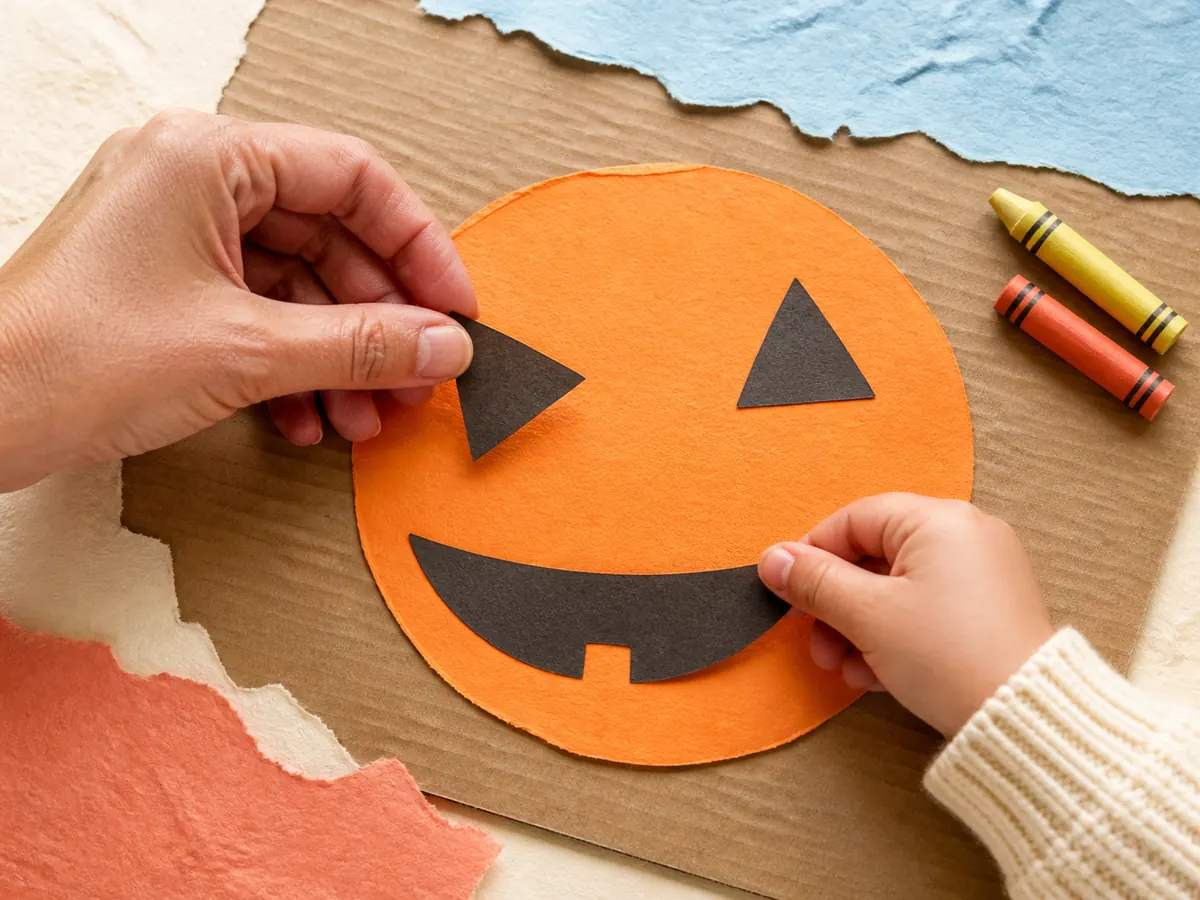
Setup: Prepare a large orange paper circle and broad paper shapes for eyes, noses and mouths. Younger preschoolers can choose and place adult-pre-cut pieces; children who enjoy tearing paper can make chunky features. Try a laughing face, a sleepy face or a pumpkin with mismatched eyes. Swap a few features before deciding what to glue down. An adult should handle cutting when the tool or task is not appropriate for the child.
10. Cardboard-box monster
Setup: Choose a clean cardboard box and let an adult remove staples, sharp fasteners and loose tape before play. The adult also handles difficult cutting. The child can add large paper eyes, broad strips, drawn spots and a silly name. Keep it as one big character instead of filling the project with tiny decorations. Choosing colors and placing features is enough; a flap mouth or dictated description adds another step. The result can stand on a shelf or join pretend play.
11. Sponge-painted pumpkin shapes
Setup: Cover the table, place a simple pumpkin outline on paper and pour a small amount of washable children’s paint, labeled for the child’s age, into a shallow tray. Show how to dab with a large sponge rather than sweep it across the page. One color is enough; a second can add spots or a stem. Follow the art material’s label and directions, supervise its use, and keep the paint on the art surface rather than skin; see the CPSC guidance for children’s art materials. Overlapping colors or a dry background can extend the picture.
12. Play-dough pumpkin patch
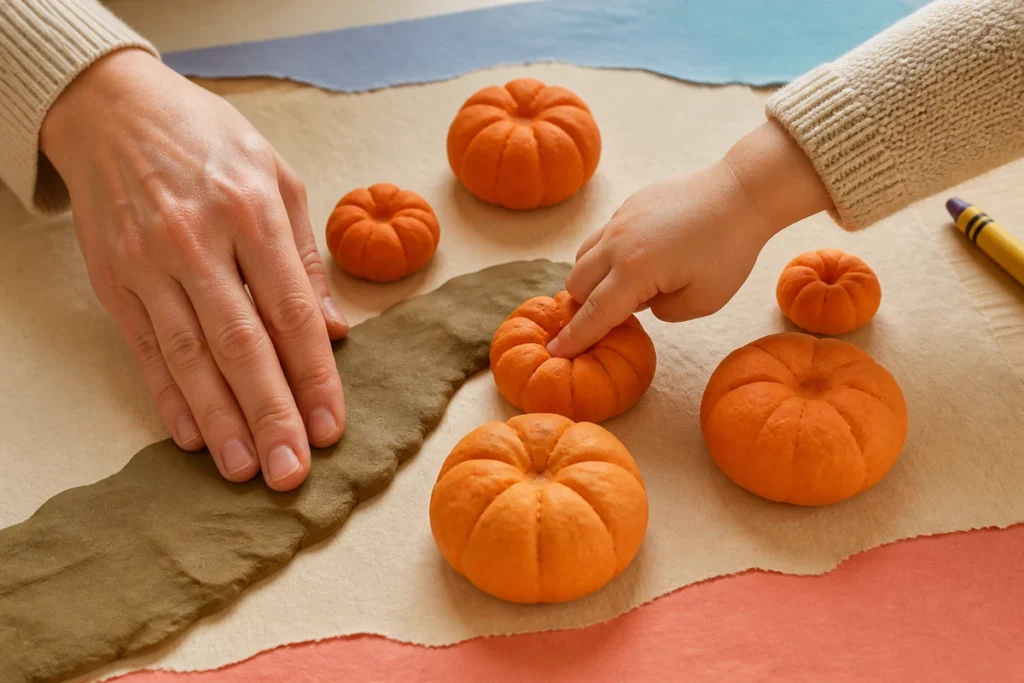
Setup: Put age-labelled play dough on a wipe-clean surface. Roll several orange balls, press a line down each side and arrange them as a pretend pumpkin patch. Fingers can make paths and fences, so extra pieces are unnecessary. Talk about which pumpkin is tall, tiny or wonky, or move them into a simple market game. To extend the scene, add signs made from larger suitable materials. Follow the product’s age label and directions, supervise as appropriate, and remind children that play dough is for play, not eating.
13. Paper-strip silly monsters
Setup: Offer broad paper strips, a large backing sheet, glue and big paper features. Pre-cut strips and shapes when needed. Children can arrange long legs, short arms, sideways hair or an enormous smile before deciding what to stick down. Use drawn or large paper eyes rather than tiny beads or loose craft eyes. Start with one monster and three or four pieces; a whole family with funny jobs makes a longer project. Mismatched pieces are part of the fun.
For a ready-to-print quiet option, the Halloween Coloring Book – 25 Printable Pages contains 25 Halloween coloring pages for ages 3–8.
For more open-ended play, browse more activity ideas.
Active indoor Halloween games
For movement play, choose a clear indoor area and keep the rules short. These games favour soft equipment, controlled actions and floor-level targets.
14. Pumpkin movement trail
Setup: Place large paper pumpkin markers along a short, clear route. Use suitable low-tack tape only if the floor surface allows it, keeping every marker flat. Give each pumpkin one prompt: tiptoe, march slowly, turn around or make a pose. Walk the trail together first. Repeat one move for the simplest trail, or let another player invent the final instruction. Keep the route away from stairs and obstacles, and use the floor rather than asking children to jump on furniture.
15. Rolled-sock ghost toss
Setup: Roll clean, soft socks into three or four “ghosts” and place a laundry basket or box on the floor. Start close and take turns tossing one sock toward the target. Move the basket farther away only while everyone still has control. Preschoolers can drop or underarm-toss; keep a simple team total if wanted. Clear the throwing area, keep the target at floor level and move breakable objects out of range. Leave the socks undecorated, with no buttons or small pieces attached.
16. Halloween freeze-and-move game
Setup: None beyond a clear patch of floor. Call a comfortable action such as sway like a friendly ghost, march like a pumpkin parade or stretch like a sleepy cat. Say “freeze” after a few moments, pause, then choose the next move. Music is optional. Younger children can copy you without competitive rules; when ready, players can take turns as caller. Keep movement controlled, avoid high-speed challenges, and change or skip any prompt that does not fit the child or room.

One calm Halloween wind-down activity
This is one of the simplest screen-free Halloween activities: it keeps the theme going without extra materials.
17. Halloween story chain
Setup: Sit together and begin with one gentle sentence: “A little pumpkin found a bright blue hat.” Each person adds one sentence, keeping the story silly, familiar and short. Offer a choice when a preschooler needs help: “Should the pumpkin visit a cat or a duck?” Stop after a cheerful ending, even if the story has only four lines. Bringing back an earlier character or solving a small problem adds complexity. This calm spoken activity needs no props, performance or particular outcome.
How to keep Halloween activities gentle and preschool-friendly
Choose silly surprises instead of scary ones: a ghost looking for its socks is easier to play with than a threatening character. Familiar objects such as pumpkins, cats, hats and autumn leaves give children an immediate way into the game.
Offer one instruction at a time and two simple choices rather than a long list of rules. Let the child skip a sound, character, material or movement and join again at the next step. For ages 6–7, add complexity only as an option: they can invent clues, create a short sequence, keep a friendly team score or extend a story. The preschool version should still work on its own.
Simple Halloween activity safety checks
- Check product age labels and manufacturer instructions before setting out toys, stickers, play dough, paint or other craft supplies.
- Leave out small pieces or decorations that are unsuitable for the child, and use large paper alternatives where possible; follow UK toy-safety guidance on age recommendations and small parts.
- Let an adult handle cutting, staples and difficult cardboard preparation where applicable.
- For movement games, clear the floor, keep routes away from stairs and breakables, and choose controlled actions that fit the space.
- Use supervision that suits the activity, materials and child.
Frequently asked questions
What are easy Halloween activities for preschoolers?
Easy choices include Halloween charades, seasonal I Spy, drawing prompts, paper pumpkin faces and rolled-sock ghost toss. Pick by setup, mess and energy rather than trying to prepare several ideas. The quick-picks table shows which Halloween activities for preschoolers need materials, movement space or hands-on adult help.
What are some not-scary Halloween activities for young children?
Use friendly pumpkins, silly monsters, cats, hats and playful ghosts in matching, drawing or storytelling games. Keep choices simple and let a child leave out any character, sound or action. Familiar books and household objects can also make the theme feel light without requiring elaborate decorations.
What Halloween activities need almost no preparation?
Charades, I Spy, monster movement and pumpkin storytelling can all begin with spoken prompts. Charades and storytelling work in a small sitting area; movement needs a clear floor. If choosing only one, match it to whether your child wants quiet conversation or active play.
What indoor Halloween games work for preschoolers?
A short pumpkin movement trail, a floor-level rolled-sock toss and a freeze-and-move game all work indoors. Clear the play area first, keep equipment soft and choose controlled motions. Charades is another useful option when there is less room for movement.
How can I adapt Halloween activities for ages 3–7?
Keep the preschool version to one instruction, a few familiar materials and simple choices. Older children can invent clues, add picture pairs, create a movement sequence, keep a friendly score or extend a story. Make the extra challenge optional so children of different ages can still play together.
Choose one Halloween activity and keep it simple
Start with the constraint that matters most today: no setup, low mess, quiet play or room to move. Choose one idea, set out only what it needs and stop while it is still enjoyable. A small, playful Halloween moment is enough; there is no need to complete a whole seasonal checklist.
You can also browse more screen-free activities for another simple option.


3 notes from other parents