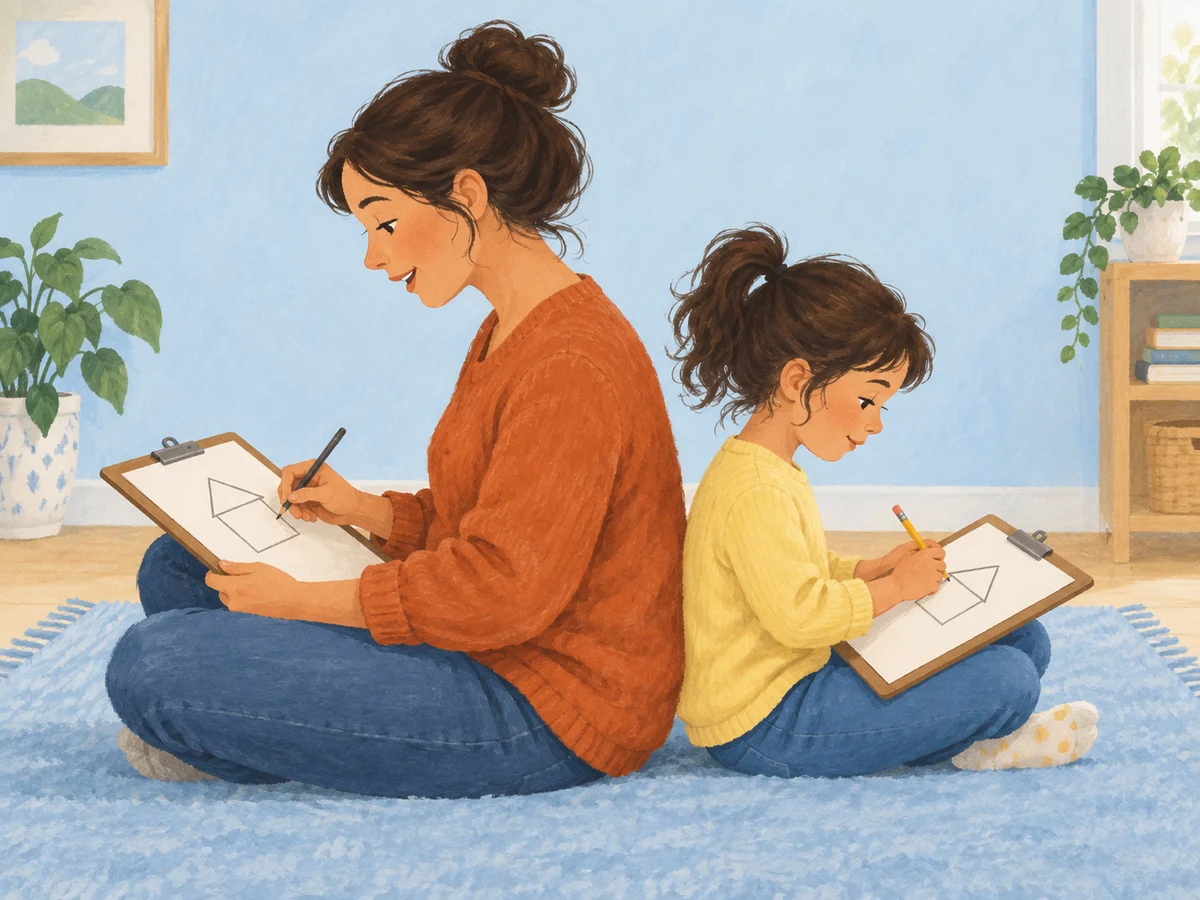
A listen and draw game for kids is a two-player activity: one person describes a hidden picture, and the other draws it from the spoken directions. Start with a few familiar shapes, allow questions, then reveal the pictures and swap roles. You need blank paper, something to draw with and a way to hide the first picture.
The interesting part is discovering what each person understood. A window in an unexpected place gives you something useful to talk about; neat lines and identical artwork are not the goal of this version.
How to play a listen and draw game
Set up two drawing spaces
Give each player paper and a pencil or crayon. Fold a large piece of card into a standing screen between the pages, or sit back-to-back with each page supported on a book. Check that both people can hear comfortably.
Choose a speaker, who has the original drawing, and a listener, who draws the copy. An adult can describe the first picture, then let the child take that role. Agree which edge is the top of each page before starting.
This is a drawing version of a barrier game. Gloucestershire Health and Care NHS Foundation Trust includes blank-paper drawing in its barrier-game guidance, alongside adjusting the length and complexity of instructions.
Describe, draw, then reveal
- Choose a small picture. The speaker draws a simple design privately. Use shapes both players recognise.
- Describe one part. Name the shape and where it goes. Pause while the listener draws.
- Welcome questions. The listener can ask for repetition or a missing detail. Keep the original hidden while answering.
- Compare and swap. Place the pages side by side. Find a detail that matches and talk through one difference before changing roles.
For a first attempt, demonstrate with the pages visible before adding the screen. NRICH’s Barrier Games activity uses this gradual introduction and invites players to discuss which words helped them copy an arrangement.
Try this simple house drawing round
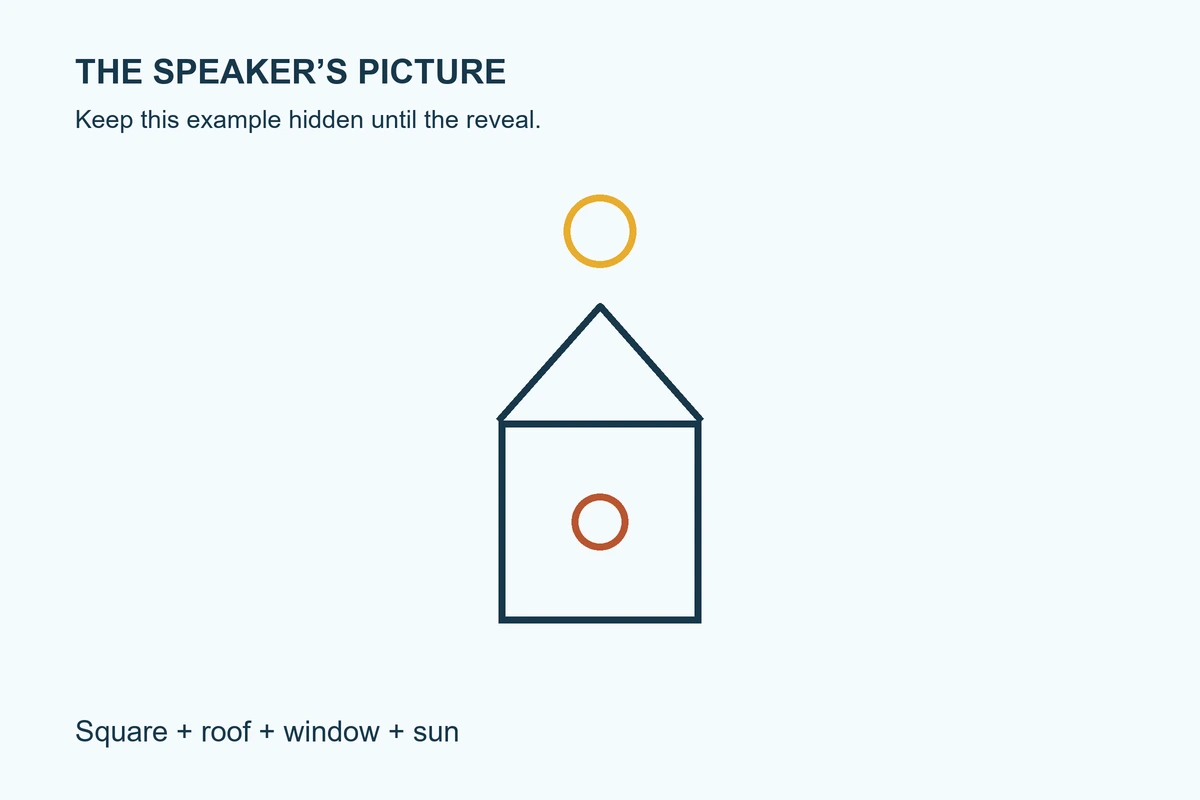
This original example gives the speaker a ready-to-use starting point. Prepare a house made from a square, a triangle roof and one round window, with a sun above it. The listener should not see the example until the reveal.
Read these directions one at a time
- “Draw a large square in the middle of your page. Leave space above it.”
- “Draw a triangle on top of the square. Its bottom edge touches the square’s top edge. This is the roof.”
- “Inside the square, draw one small circle in the middle. This is a window.”
- “Above the roof, draw another circle. Leave a gap between this circle and the roof. This is the sun.”
Stop there for the first round. There is no need to add rays, a door or a garden. If the child adds something anyway, notice it at the reveal without calling the whole drawing wrong.
Make room for a helpful question
Try this short exchange before the listener draws the window:
- Speaker: “Draw a small circle.”
- Listener: “Where does it go?”
- Speaker: “Inside the square, in the middle.”
The first instruction left out a location. Asking about it completes the message. If a child is unsure what to ask, offer “Which shape?”, “How many?” or “Where on the page?” and let them choose the useful question.
What to say when the pictures look different
Look at the relationship between the shapes before judging their appearance. A wobbly circle can still be inside the square, exactly where the speaker intended.
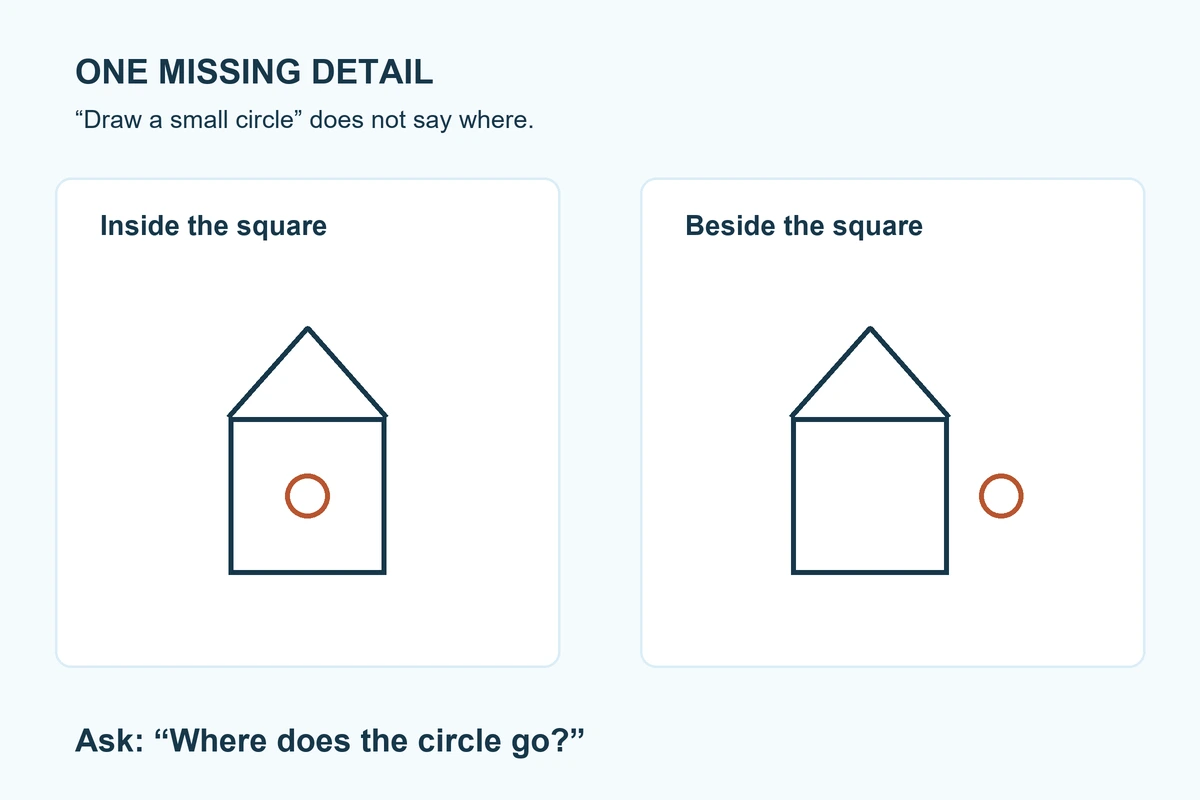
If one window is outside the house, you could say: “You drew the circle beside the square. I meant inside it. Did I say where it should go?” Check the words together instead of assuming that the listener missed them.
Choose one instruction to improve, then try that part again on a fresh corner of the page. “Put it there” needs a visible gesture; “put a circle inside the square” gives information the listener can use without seeing the speaker.
Leave small size differences alone unless size was part of the instruction. Then let the child describe a new picture for you. If they prefer inventing stories to copying pictures, switch to an animal storytelling activity where the next idea can take any direction.
Make the next round easier or harder
For an easier round, use just two shapes: a large circle with a small circle inside. Name and point to the shapes together before hiding the original. Keep each instruction short and wait for a clear “ready” before continuing.
For a more detailed round, add one new challenge, such as two windows instead of one, or a sun beside the roof rather than above it. Say exactly which detail changed. Keep questions available; removing them turns this version into a different challenge.
Let the players choose whether to continue after a role swap. For children who want different levels of involvement, our guide to activities for siblings of different ages offers ways to share an activity with different roles.
Listen and draw game FAQs
Can we play without a screen or printable?
Yes. Sit back-to-back with paper on firm drawing surfaces, or keep the original out of the listener’s view. Draw your own simple picture; no downloadable worksheet is needed.
What if my child does not know left and right?
Choose directions such as “inside”, “above” and “below” that you can demonstrate first. Leave left and right out of that round. If you introduce them later, agree that the words refer to the listener’s page as they look at it.
Can more than two children play?
Yes. One speaker can describe a picture while several listeners draw separately. Give everyone time to finish each part and ask questions. Compare the different interpretations together, then choose a new speaker.
Keep the first game small: one picture, one reveal and a chance to exchange roles. For another day, browse our screen-free activity ideas.


